
Few things make a driver’s stomach drop like a glowing check engine light. It might come on during your commute, on a road trip, or the morning after a cold snap, and it rarely explains itself. Is it serious? Can you keep driving? Do you need a tow? The truth is that the light can mean anything from a loose gas cap to a problem that needs attention right away. This FAQ answers the most common questions about the check engine light in Kansas City, explains how OBD II diagnostics work, and tells you what to do when the light comes on.
What Is the Check Engine Light?
The check engine light, sometimes called the malfunction indicator lamp, is part of your car’s onboard diagnostic system. The engine computer constantly monitors sensors that track things like airflow, fuel mixture, exhaust gases, and engine timing. When a reading falls outside the expected range for long enough, the computer stores a trouble code and turns on the light. The light is a general alert that something in the engine, fuel, ignition, or emissions systems needs attention. It does not tell you what is wrong by itself, which is why a proper scan matters.
Why Did My Check Engine Light Come On?
There are dozens of possible reasons. Some of the most common include:
- A loose, damaged, or missing gas cap
- A failing oxygen sensor
- Worn spark plugs, bad ignition coils, or other causes of engine misfires
- A dirty or failing mass airflow sensor
- A problem with the catalytic converter
- Issues in the evaporative emissions system, which captures fuel vapors
- A faulty thermostat that keeps the engine from reaching normal temperature
- Vacuum leaks or problems with the fuel injection system
- A failing battery or charging system in some vehicles
- A transmission related fault in some vehicles
Because so many different faults trigger the same light, guessing is a poor strategy. The only reliable way to know is to read the codes and test the related parts.
Is It Safe to Keep Driving With the Light On?
It depends on how the light behaves and how the car feels. A steady light with no other symptoms usually means you can drive to get it checked soon, though it is not something to put off for months. A flashing light is different. Flashing generally signals an active engine misfire, which can send unburned fuel into the exhaust and overheat the catalytic converter, causing expensive damage. If the light is flashing, reduce your speed and load, avoid hard acceleration, and get the car looked at as soon as you can. You should stop driving and call for help if the light comes on together with any of the following:
- A red oil pressure or temperature warning
- Steam or smoke from under the hood
- Loss of power, severe shaking, or stalling
- Strange noises, a strong burning smell, or a smell of fuel
- A brake or steering problem
What Is the Difference Between a Steady and a Flashing Light?
A steady light means the computer found a fault that needs attention but is not necessarily doing immediate harm. A flashing light means something more urgent is going on, most often a misfire serious enough to damage parts of the exhaust system. Treat a flashing light as an emergency. Your owner’s manual explains how your specific vehicle shows warnings, so it is worth checking.
Should I Check the Gas Cap First?
Yes, it is a smart first step. The fuel system is sealed so vapors do not escape, and a loose or cracked gas cap can break that seal and trigger the light. Turn the cap until it clicks, make sure the seal is intact, and drive normally for a while. If the cap was the cause, the light may turn off by itself after several drive cycles. If it stays on, there is something else going on that needs a proper scan.
What Is OBD II, and How Does It Work?
OBD II stands for On Board Diagnostics, second generation. It is a standardized system that has been used in passenger vehicles for many years. Every compatible car has a diagnostic port, usually located under the dashboard near the steering column. A technician plugs a scan tool into this port to read the stored trouble codes, view live sensor data, and check whether the car’s self tests have completed. The codes follow a standard format, so a code that begins with a letter and several digits points to a particular system or circuit, such as ignition, fuel, or emissions.
Does a Trouble Code Tell Me Which Part to Replace?
Not always, and this is one of the biggest misunderstandings about the check engine light. A code tells you which system or circuit reported a problem, not which part has failed. For example, a code pointing to an oxygen sensor might be caused by the sensor itself, but it could also come from an exhaust leak, a wiring fault, or an engine issue that makes the sensor read abnormally. Replacing parts based on a code alone can waste money and leave the real problem unsolved. Good diagnostics combine the codes with live data, a visual inspection, and testing of the suspect components.
Can I Just Get the Codes Read for Free?
Many auto parts stores will read codes for free, and personal scan tools are inexpensive and easy to find. That can be a useful starting point, because it gives you a general idea of the problem. Just keep in mind that a code is only the first step. Interpreting it correctly, finding the actual cause, and fixing it properly takes more than a code number.
Can I Clear the Code and Make the Light Go Away?
You can, but it is usually a bad idea. Clearing the code turns the light off temporarily, but it does not fix the underlying issue, and the light will return if the fault is still there. It also erases stored information that a technician needs for diagnosis. In places that require emissions or inspection testing, clearing codes also resets the car’s readiness monitors, which can cause the car to fail or be turned away from a test until it has completed enough driving. Do not disconnect the battery or clear codes just to hide the light.
Will the Light Go Off by Itself?
Sometimes. If the problem was temporary, such as a loose gas cap that has been tightened, the computer may turn the light off after several successful drive cycles. If the fault is real, the light will stay on or come back. A light that goes off and returns repeatedly is still telling you something, and an intermittent fault deserves the same attention as a constant one.
Can a Check Engine Light Hurt My Gas Mileage?
It can. Many of the faults that trigger the light, such as a bad oxygen sensor, a misfire, or a dirty airflow sensor, can cause the engine to run less efficiently. You may notice poorer fuel economy, rough idling, hesitation, or reduced power. Fixing the cause often brings performance back to normal.
Does Kansas City Weather Affect the Light?
It can play a role. Cold snaps put extra strain on batteries and sensors, and swings between freezing nights and warmer days can affect rubber seals, hoses, and connections. Rough roads add another factor, since jolts from potholes can loosen connectors, damage sensors, or affect other components. Our article on winter potholes and what they do to your alignment in Kansas City explains how rough pavement affects your car, and it is a good companion read if the light came on after a hard hit on the road.
What If My Car Will Not Start and the Light Is On?
A no start condition with a lit dashboard can point to a weak battery, a bad connection, or a sensor or fuel problem, among other causes. Our guide to the top 10 reasons your car won’t start and how to get back on the road goes through the common causes, which can help you narrow things down before you call for help.
What Should I Do When the Light Comes On?
- Stay calm and note whether the light is steady or flashing
- Check for other warning lights, unusual sounds, smells, or changes in how the car drives
- Tighten the gas cap if it looks loose
- If the light is flashing or the car is running badly, reduce speed and have it checked right away
- If the car seems normal, schedule a diagnostic soon
- Write down any symptoms and when they happen, since that helps with diagnosis
- Do not clear the code or disconnect the battery just to turn the light off
Can a Mobile Mechanic Diagnose the Check Engine Light?
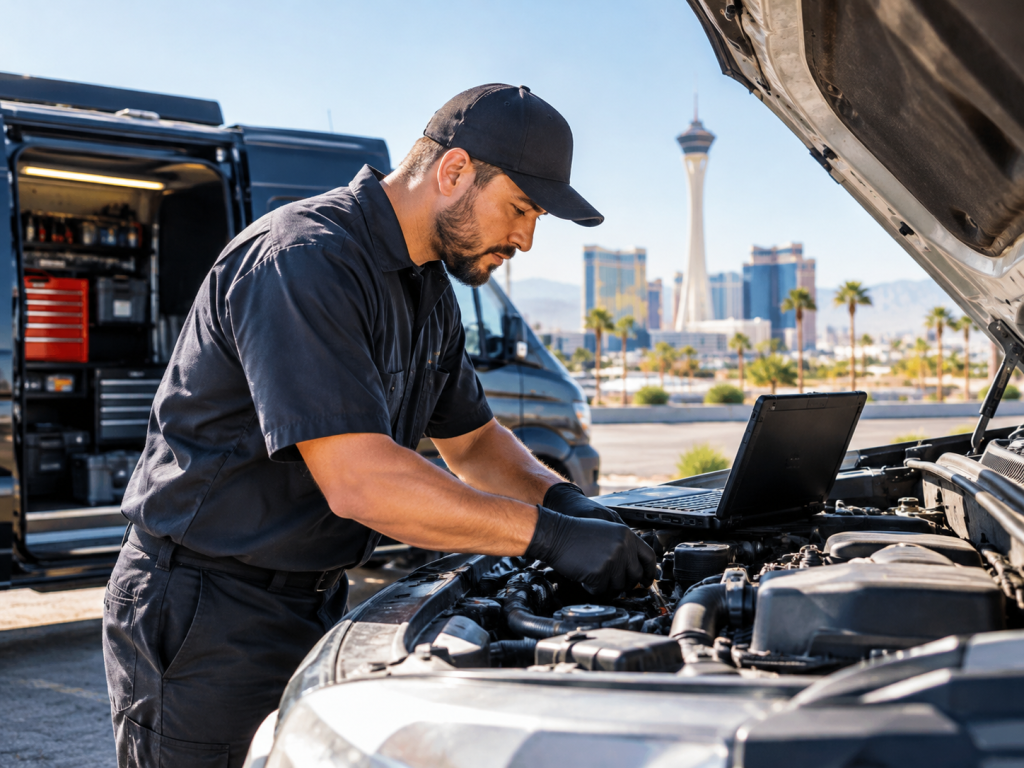
Yes, in many cases. A mobile mechanic can come to your home or workplace in the Kansas City area, connect a scan tool, read the codes and live data, inspect and test the related parts, and explain what they find. Many common repairs, such as replacing spark plugs, ignition coils, and sensors, can often be completed on site. Some problems, such as major engine or transmission repairs, may need the equipment of a full shop, and a trustworthy technician will tell you honestly when that is the case. When you book, tell them whether the light is steady or flashing, when it came on, and any symptoms you have noticed.
Do Not Ignore the Light
A check engine light is your car asking for attention. Small problems are usually cheaper to fix when they are found early, and some, like a misfire, can become expensive if you wait. Get the codes read, find the real cause, and fix it properly.
To learn more about our services, visit our homepage. If your check engine light is on, reach out through our contact us page and we will come to you anywhere in the Kansas City area.