
Every Kansas City winter produces the same predictable result. As temperatures swing back and forth between freezing and thawing, roads across the metro develop potholes at a pace that seems to outrun repair crews no matter how quickly they work. Drivers navigating routes like Ward Parkway, the Paseo, or any of the countless residential streets throughout KC know the routine of swerving around a fresh crater one week only to find a new one has opened up nearby the next. What often gets less attention than the potholes themselves is exactly what a hard hit does to your vehicle’s alignment, and why this specific kind of damage is so common here.
Why Kansas City’s Freeze Thaw Cycle Produces So Many Potholes
Potholes form when water works its way into small cracks in pavement, then freezes and expands, widening the crack in the process. When temperatures rise again, the ice melts, leaving a slightly larger gap than before. Kansas City’s winter climate is almost perfectly suited to repeating this cycle many times over a single season, since our temperatures rarely stay consistently below freezing for extended stretches the way they might further north. Instead, the metro experiences repeated freezing and thawing throughout the winter months, meaning the pavement damaging cycle happens over and over rather than just once or twice, which is exactly why local roads seem to develop fresh potholes almost every year like clockwork.
What Wheel Alignment Actually Means And Why It Matters
Wheel alignment refers to the precise angles at which your tires meet the road, carefully calibrated by the manufacturer to keep your vehicle tracking straight, handling predictably, and wearing tires evenly over time. These angles, generally described as camber, caster, and toe, are set through the positioning of steering and suspension components, and even a small deviation from proper specification can noticeably affect how a vehicle drives.
Alignment is not something that stays fixed permanently once set at the factory or during a service visit. It can shift gradually through normal wear, but a sudden, hard impact, like striking a deep pothole at speed, can knock these angles out of specification almost instantly, particularly when the impact affects one side of the vehicle more than the other.
How A Pothole Impact Throws Off Your Alignment
When a tire drops into a pothole and strikes the far edge, the force travels through the tire and wheel directly into the steering and suspension components that hold everything in proper position. A hard enough impact can bend a component slightly, shift a mounting point, or otherwise alter the careful geometry that alignment depends on. Because Kansas City potholes vary so much in depth and shape from one to the next, the resulting alignment damage can range from barely noticeable to significant, depending on how hard the impact was and which specific components absorbed the force.
Impacts that hit only one side of the vehicle, which is common given how potholes are rarely centered perfectly under both tires at once, tend to cause uneven alignment changes that are often more noticeable than a symmetrical impact would produce, since the vehicle ends up pulling toward one side rather than simply needing a general realignment.
Signs Your Alignment Has Been Knocked Out Of Spec
A vehicle that pulls noticeably to one side while driving straight on a level road is one of the clearest signs of an alignment issue following a pothole impact. A steering wheel that sits crooked even when the vehicle is tracking straight, despite never having been readjusted, is another common indicator. Uneven tire wear, particularly when one tire shows noticeably more wear on one edge compared to the rest of the tread, often develops over the weeks following a hard impact as the misaligned angles cause the tire to contact the road unevenly.
Vibration through the steering wheel, especially one that appears suddenly after hitting a significant pothole, can indicate either an alignment issue or physical damage to a wheel or tire that occurred during the same impact. If your vehicle has experienced any starting difficulties around the same time as a pothole incident, our guide on the top 10 reasons your car won’t start and how to get back on the road covers a range of causes worth ruling out separately from any alignment concerns.
Why Ignoring Alignment Damage Gets Expensive
Driving with alignment out of specification does more than create a slightly annoying pull to one side. Misaligned wheels cause uneven, accelerated tire wear, meaning tires that should have lasted years can wear out considerably faster, sometimes needing replacement well before their expected mileage. This uneven wear also reduces handling precision and can affect braking performance, which matters considerably during Kansas City’s often unpredictable winter driving conditions.
There is also a fuel efficiency cost that many drivers overlook. Misaligned wheels create additional rolling resistance as tires fight against angles that are no longer optimized for straight, efficient travel, which means a car with alignment issues often uses slightly more fuel than the same vehicle would with everything properly adjusted. It is a modest cost on its own, but combined with accelerated tire wear and reduced handling, it adds up to a meaningfully more expensive way to drive than simply addressing the alignment issue when it first appears.
What To Do After Hitting A Significant Pothole
After a hard pothole impact, it is worth paying close attention to how the vehicle handles over the following days. Any pulling sensation, unusual tire wear, or steering wheel vibration that appears in the aftermath is worth having checked promptly, since alignment issues rarely improve on their own and tend to accelerate related wear the longer they go unaddressed.
Why A Mobile Mechanic Fits Kansas City’s Pothole Season
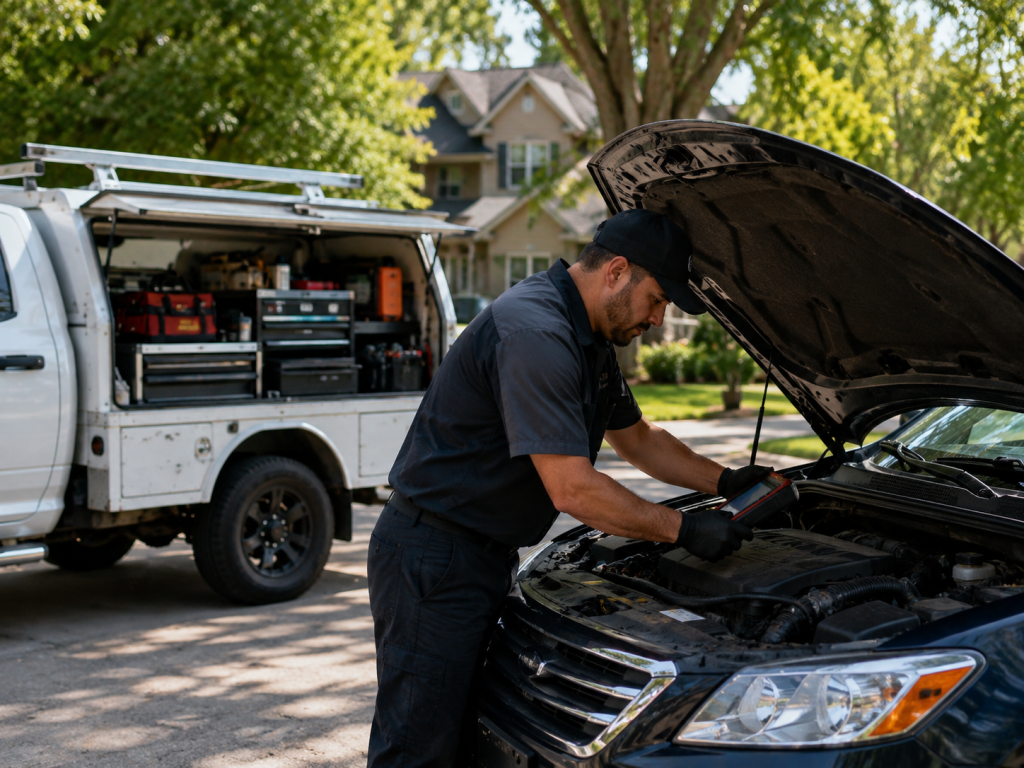
Given how suddenly pothole related alignment damage tends to appear, having a technician come to you rather than scheduling a shop visit days later can make a real difference, particularly if you are noticing a pull that makes highway driving feel less stable. A mobile mechanic can check alignment related symptoms and inspect suspension components right where your car is parked, without the added concern of driving a potentially misaligned vehicle across town.
We covered the broader benefits of this approach in our article on why mobile mechanics are better than traditional auto shops in Kansas City, which explains how convenience and quick response times come together, particularly useful during a season when pothole damage can happen with no warning at all.
Stay Ahead Of What KC’s Potholes Do To Your Alignment
Kansas City’s freeze thaw cycle is not going to change, which means pothole season will keep testing local alignment systems every single year. Paying attention to how your vehicle handles after a hard impact, rather than assuming a pull or a vibration will resolve on its own, is one of the simplest ways to catch alignment damage before it turns into a costly set of unevenly worn tires.
If you have recently hit a significant pothole or noticed any of the warning signs covered here, visit our homepage to learn more about our services, or head to our contact us page to schedule a visit wherever your vehicle happens to be.
Catching alignment damage early is one of the simplest ways to protect your tires and your handling through another Kansas City pothole season.